

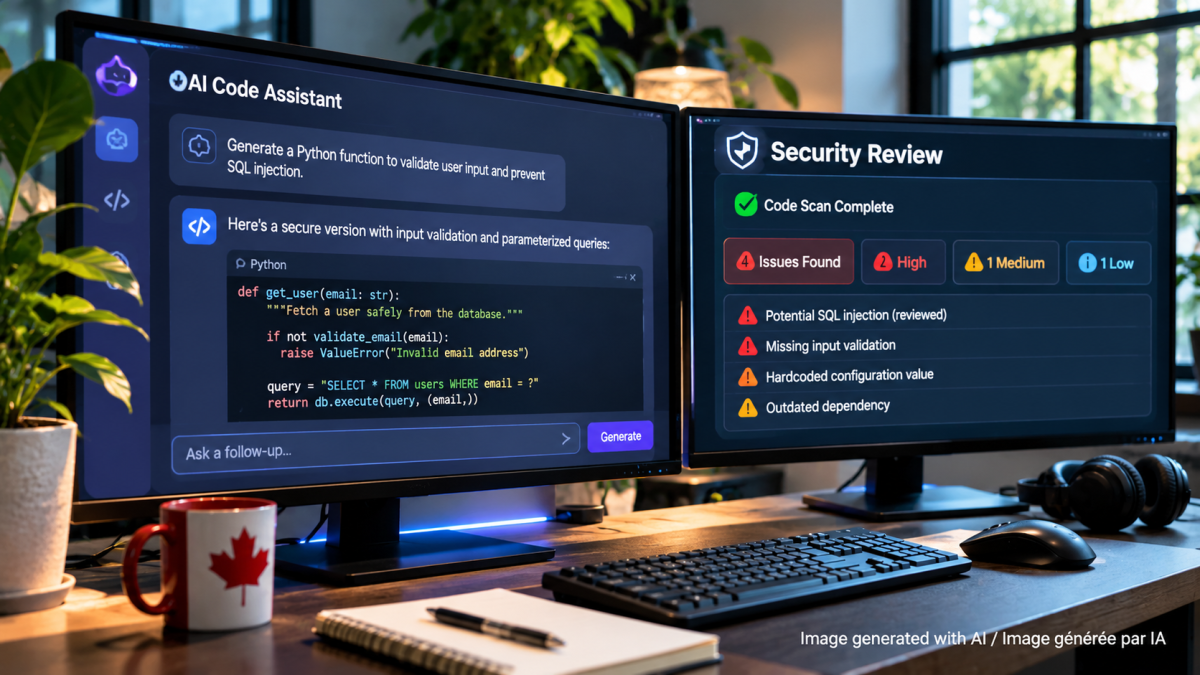
Artificial intelligence is transforming software development. New research from the Linux Foundation raises an important question: Are security practices keeping pace?
Artificial intelligence is rapidly changing how software is developed. Tasks that once required hours of programming can sometimes be completed in minutes. Developers are using AI assistants to generate code, identify errors, write documentation, and automate routine tasks.
For businesses, governments, educational institutions, and open-source communities, these capabilities offer enormous opportunities.
However, faster development does not automatically mean better or more secure software.
Recent research from the Linux Foundation and the Open Source Security Foundation (OpenSSF) suggests that the growing adoption of AI-assisted development is creating new challenges for cybersecurity teams.
The central concern is straightforward: We are becoming increasingly capable of producing software faster than we can properly review and secure it.
What the Research Reveals
The Linux Foundation's 2026 report, State of AI Impact on Software Security and Cybersecurity, provides an important perspective on how organizations are adapting to AI-assisted development.
Among its findings:
- 58% of respondents report that their teams deliver code faster than security reviews can keep up.
- 60% say AI coding tools increase external software dependencies.
- 82% express concern that overreliance on AI is weakening developers' security skills.
- Only 30% report having a dedicated role responsible for AI-related security threats.
These figures highlight an emerging challenge.
AI is helping developers produce more software, but organizations must ensure that their security processes can handle the increased volume and complexity.
The solution is not necessarily to slow down innovation. Instead, security practices need to evolve alongside development tools.
When Working Code Is Not Secure Code
One of the biggest misconceptions surrounding AI-generated software is that functioning code must also be reliable and secure.
An AI assistant might generate a login system that appears to work perfectly. Users can register, sign in, and access their accounts.
However, the underlying code could still contain vulnerabilities.
For example, it might fail to validate user input properly, expose sensitive information, use insecure authentication practices, or grant users more permissions than necessary.
These problems are not exclusive to AI-generated software. Human developers make similar mistakes.
The difference is the speed and scale at which AI can produce code, potentially allowing vulnerabilities to spread across multiple applications before anyone notices.
AI-generated code therefore requires the same careful review, testing, and security validation as code written by humans.
The Growing Risk of Software Dependencies
Modern software rarely operates independently.
Applications frequently rely on external libraries, frameworks, packages, and services. Many of these components are open source.
AI coding assistants can recommend additional dependencies to complete tasks quickly. While convenient, these recommendations can introduce new security and maintenance responsibilities.
An unfamiliar package might contain vulnerabilities, lack active maintenance, or introduce unnecessary complexity.
Organizations should understand which components their applications depend on, where those components originate, and whether they are receiving security updates.
Software Bills of Materials (SBOMs), dependency scanning, and established update procedures can help organizations maintain that visibility.
This is particularly important for businesses and public institutions that depend on software to deliver essential services.
AI Can Also Strengthen Cybersecurity
Despite these concerns, artificial intelligence should not be viewed only as a security risk.
AI-assisted tools can also help developers identify vulnerabilities, analyze unfamiliar code, generate tests, and investigate potential security weaknesses.
In October 2026, OpenSSF published guidance titled Finding and Fixing Software Vulnerabilities Using AI: A Guide for Developers.
The guidance encourages developers to use AI as part of a structured security process, including validating findings, reviewing proposed fixes, and testing changes before deployment.
An important distinction is that AI-generated security recommendations should not automatically be trusted.
An AI assistant might identify a genuine vulnerability but suggest a fix that addresses only part of the problem. In other cases, a proposed correction might unintentionally introduce another defect.
AI can assist with security work, but independent verification remains essential.
Why This Matters for Canada
Canada's businesses, educational institutions, and public-sector organizations are increasingly dependent on software and digital infrastructure.
As AI-assisted development becomes more common, these organizations will need to consider not only the productivity benefits but also the security implications.
For Canadian organizations handling personal information, financial transactions, educational records, or critical services, poorly secured software can have significant consequences.
Smaller organizations face particular challenges. They may benefit substantially from AI-assisted development while lacking dedicated cybersecurity teams.
This makes practical security guidance, accessible training, and reliable development practices especially important.
Open-source communities have an important role to play by sharing security knowledge, developing transparent tools, and helping organizations adopt responsible software development practices.
However, transparency alone does not guarantee security. Open-source software still requires active maintenance, vulnerability management, and sustained community support.
Five Practical Steps Organizations Can Take
Organizations do not need to abandon AI coding assistants to improve security.
Instead, they can establish clear expectations for how these tools are used.
1. Require human review. AI-generated code should undergo appropriate review before being introduced into production systems, particularly when authentication, payments, sensitive information, or critical infrastructure are involved.
2. Automate security testing. Static analysis, dependency scanning, automated tests, and security checks can help identify problems earlier in development.
3. Maintain visibility into dependencies. Organizations should document external components, monitor vulnerabilities, and establish procedures for updating affected software.
4. Protect sensitive information. Developers should avoid sharing confidential data, credentials, or proprietary source code with AI services unless appropriate safeguards and organizational approvals are in place.
5. Invest in developer education. AI should strengthen developers' capabilities rather than replace their understanding of software architecture, security principles, and responsible engineering practices.
These measures can help organizations benefit from AI while maintaining appropriate oversight.
Innovation and Responsibility Must Advance Together
Artificial intelligence is likely to remain an important part of software development.
Its ability to accelerate routine programming tasks, support developers, and assist with vulnerability detection presents significant opportunities.
But productivity should never become a substitute for security.
The organizations that benefit most from AI will not necessarily be those producing the largest amount of code in the shortest time.
They will be those capable of combining faster development with sound engineering, transparent processes, and effective security controls.
At the Linux Association of Canada, we believe that education, open collaboration, and responsible technology adoption are essential to building a secure and resilient digital future.
AI can help us build software faster.
Our responsibility is to make sure we build it safely.
Sources and Further Reading
- Linux Foundation Research (2026). State of AI Impact on Software Security and Cybersecurity 2026.
- https://www.linuxfoundation.org/research/ai-impact-on-cybersecurity-2026
- Open Source Security Foundation (2026). Finding and Fixing Software Vulnerabilities Using AI.
- https://openssf.org/blog/2026/10/20/new-openssf-guide-finding-and-fixing-vulnerabilities-using-ai/
- OpenSSF (2026). Securing Open Source in the Age of AI.
- https://openssf.org/wp-content/uploads/2026/05/Securing-Open-Source-in-the-Age-of-AI.pdf
- National Institute of Standards and Technology. Secure Software Development Framework.
- https://csrc.nist.gov/Projects/ssdf
- OWASP. Top 10 for Large Language Model Applications.
- https://owasp.org/projects/top-10-for-large-language-model-applications
Linux Association of Canada
Comments (0)