


Why Open Mobile Platforms Matter More Than Ever
For years, discussions about digital sovereignty have revolved around the cloud, operating systems, and government. But what about the devices in our pockets?
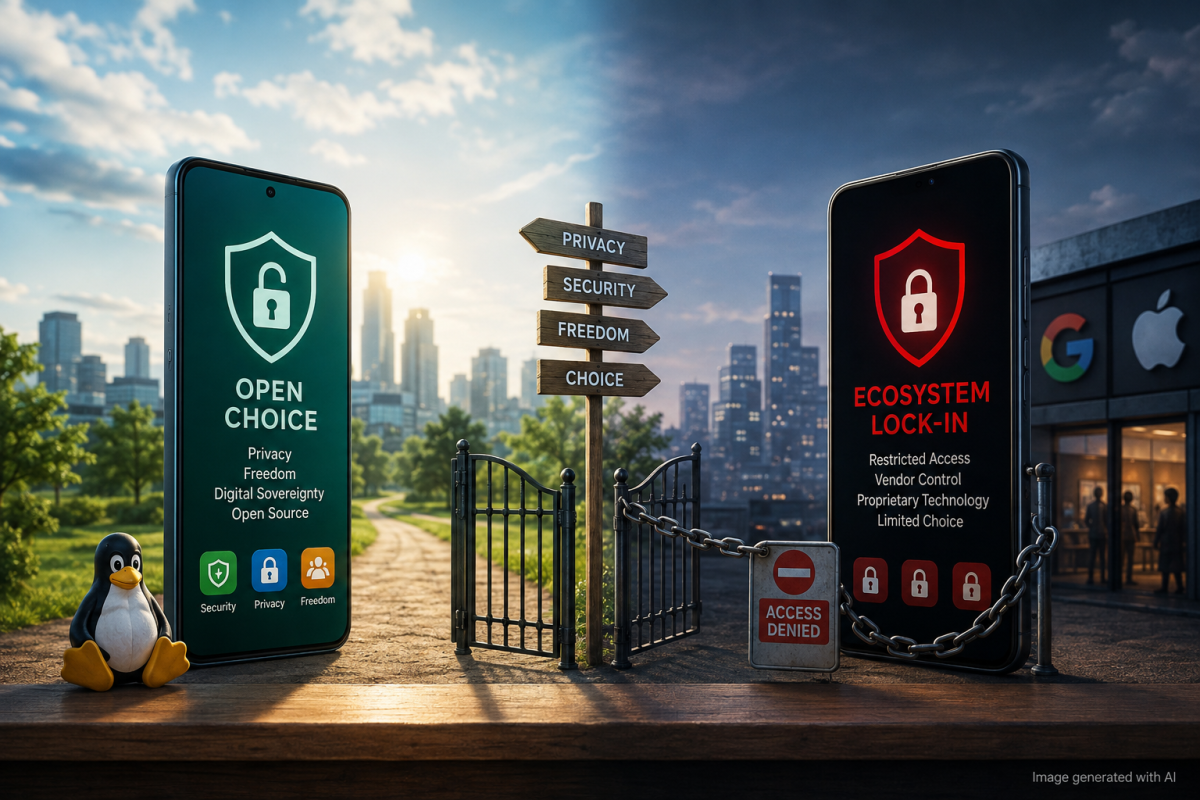
Reports coming out of the Netherlands show that Android apps are growing increasingly inaccessible on other mobile operating systems such as /e/OS, GrapheneOS, LineageOS, and other AOSP-based OSes due to their use of Google’s new Play Integrity API with “enforced” security policies.
According to Murena’s Rik Viergever, the Dutch emergency services app 112 NL is just one of many apps that have stopped working on devices running non-Google Android OSes. Previously, users had also reported issues with the Rabobank app (one of the Netherlands’ largest banks) and other services.
While this may seem like a tech issue at first glance, it touches on a much deeper root problem.
Security or Dependency?
It is hard to argue against the need for apps to protect their users from fraudulent services and malicious third parties. After all, security is a fundamental requirement for any software that aspires to serve people.
The problem is not that developers want to secure their apps. The problem is that security is being used as an excuse to impose lock-in conditions and dictate what operating system their users must use to access their service.
By tying access to critical services to Google’s Play Store integrity checks and the Android ecosystem, users of alternative mobile operating systems are left with two options - adopt Google’s heavily monitored and controlled software or Apple’s similarly restrictive offering.
Why This Matters
Digital sovereignty is about choice. It is about ensuring that people are not held hostage by one particular group of firms and their ability to dictate terms based on their dominant position (be it Google, Apple, Microsoft, or any other major technology company).
Having digital sovereignty means citizens are not at the mercy of monopolistic practices and can utilize the software tools they trust and that serve their best interests.
It means companies do not have to write off entire classes of users and build their software around one ecosystem when vendor-neutral alternatives exist.
It means open-source operating systems and apps are embraced by the technology industry as serious security alternatives and not just “fun” or experimental projects. While they may not have the same maturity or user adoption rates as their closed competitors, AOSP-based security-conscious mobile operating systems are viable for many people.
It means healthy competition. If the big tech companies are to survive, they must offer better value and functionality over their alternatives. Android and iOS apps should not stop working just because someone chose not to use Google or Apple as their preferred platform.
The Linux Association of Canada’s Position
The Linux Association of Canada (LAC) takes the position that security and openness should not be mutually exclusive.
We urge developers, governments, financial institutions, and public service organizations to consider whether their security needs truly require them to impose additional restrictions on a subset of their users beyond those required to use their service.
We encourage software developers and firms to make informed security assessments before unnecessarily restricting their users to one technology stack, particularly in the critical national security sector.
When possible, we believe software should be interoperable and not reliant on one firm to provide “security” through proprietary technology.
What’s Next?
As more countries push to gain back digital sovereignty, the choices we make today will have far-reaching implications. The technologies we adopt and endorse today will shape the choices available to everyday people, businesses, and governments in years to come. At the LAC, we believe digital sovereignty should be people-driven. The use of open standards and open source software will empower Canadians and help them make better choices for their digital future.
Comments (0)