




The siduction distribution is a desktop-oriented operating system and live medium based on the "unstable" branch of Debian GNU/Linux. Forked from aptosid in late 2011, siduction offers many separate live media with a ran…
The siduction distribution is a desktop-oriented operating system and live medium based on the "unstable" branch of Debian GNU/Linux. Forked from aptosid in late 2011, siduction offers many separate live media with a range of desktop environments. The project also promises regular releases, an open development model, and friendly relationship with its developer and user community.

SmartOS is an open-source UNIX-like operating system based on illumos, a community fork of OpenSolaris. It features four technologies - ZFS (a combined file system and logical volume manager), DTrace (a dynamic tracing f…
SmartOS is an open-source UNIX-like operating system based on illumos, a community fork of OpenSolaris. It features four technologies - ZFS (a combined file system and logical volume manager), DTrace (a dynamic tracing framework for troubleshooting kernel and application problems), Zones (a lightweight virtualisation solution), KVM and bhyve (two full virtualisation solutions for running a variety of guest operating systems, including Linux, Windows, BSD and Plan9). SmartOS is designed to be particularly suitable for building clouds and generating appliances.

Wifislax is a Slackware-based live disc containing a variety of security and forensics tools. The distribution's main claim to fame is the integration of various unofficial network drivers into the Linux kernel, thus pro…
Wifislax is a Slackware-based live disc containing a variety of security and forensics tools. The distribution's main claim to fame is the integration of various unofficial network drivers into the Linux kernel, thus providing out-of-the-box support for a large number of wired and wireless network cards.

DragonFly is an operating system and environment designed to be the logical continuation of the FreeBSD-4.x OS series. These operating systems belong in the same class as Linux in that they are based on UNIX ideals and A…
DragonFly is an operating system and environment designed to be the logical continuation of the FreeBSD-4.x OS series. These operating systems belong in the same class as Linux in that they are based on UNIX ideals and APIs. DragonFly is a fork in the path, so to speak, giving the BSD base an opportunity to grow in an entirely new direction from the one taken in the FreeBSD-5 series.

GNOME OS is an experimental, immutable Linux distribution that ships the latest in-development GNOME desktop, core applications and stack. It serves as a reference for developers and testers. It is designed around the mo…
GNOME OS is an experimental, immutable Linux distribution that ships the latest in-development GNOME desktop, core applications and stack. It serves as a reference for developers and testers. It is designed around the modern systemd and GNU-based userland built from the Freedesktop SDK. Initially, GNOME OS used a library and set of utilities called OSTree to deploy the root filesystem and manage updates, but later migrated to "systemd-sysupdate" which offers enhanced immutability, auto-updating, adaptability, factory reset, uniformity and other modernised security properties. GNOME OS can be loaded as a live image in Boxes, VirtualBox, QEMU and other virtualisation software, but it can also be installed on a standard x86_64 hardware. The distribution does not support traditional package management; however, additional software applications can be installed via the Flatpak utility which is supported out of the box.

Founded in 2014 by Oliver Pinter and Shawn Webb, HardenedBSD is a security-enhanced fork of FreeBSD. The HardenedBSD Project is implementing many exploit mitigation and security technologies on top of FreeBSD. The projec…
Founded in 2014 by Oliver Pinter and Shawn Webb, HardenedBSD is a security-enhanced fork of FreeBSD. The HardenedBSD Project is implementing many exploit mitigation and security technologies on top of FreeBSD. The project started with Address Space Layout Randomization (ASLR) as an initial focal point and is now implementing further exploit mitigation techniques.
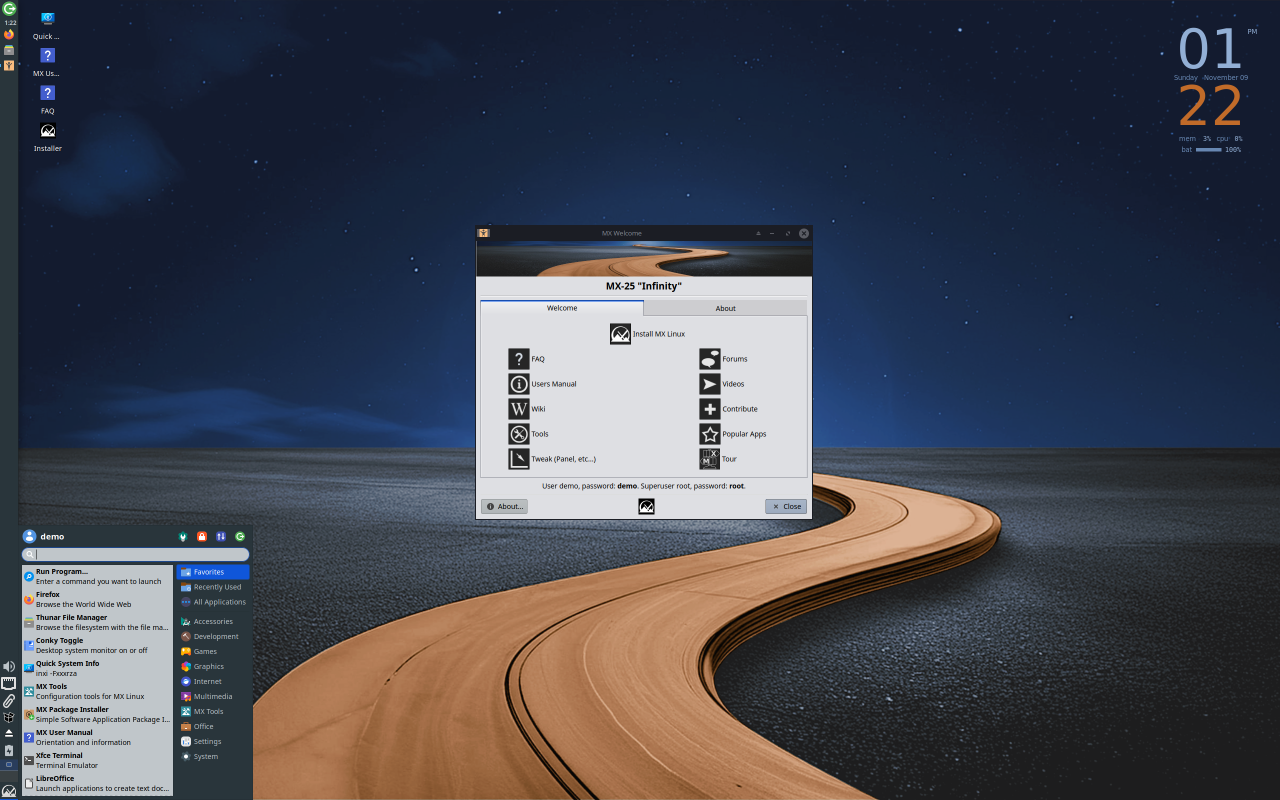
MX Linux, a desktop-oriented Linux distribution based on Debian's "Stable" branch, is a cooperative venture between the antiX and former MEPIS Linux communities. Using Xfce as the default desktop (with separate KDE Plasm…
MX Linux, a desktop-oriented Linux distribution based on Debian's "Stable" branch, is a cooperative venture between the antiX and former MEPIS Linux communities. Using Xfce as the default desktop (with separate KDE Plasma and Fluxbox editions also available), it is a mid-weight operating system designed to combine an elegant and efficient desktop with simple configuration, high stability, solid performance and medium-sized footprint.

Salix is a Slackware-based Linux distribution that is simple, fast, easy to use and compatible with Slackware Linux. Optimised for desktop use, Salix OS features one application per task, custom package repositories, adv…
Salix is a Slackware-based Linux distribution that is simple, fast, easy to use and compatible with Slackware Linux. Optimised for desktop use, Salix OS features one application per task, custom package repositories, advanced package management with dependency support, localised system administration tools and innovative artwork.

LxPup is a variant of Puppy Linux that uses the LXDE desktop environment. It provides the Openbox window manager, the LXPanel panel and the PCManFM file manager. There have been several flavours of LxPup, some built as d…
LxPup is a variant of Puppy Linux that uses the LXDE desktop environment. It provides the Openbox window manager, the LXPanel panel and the PCManFM file manager. There have been several flavours of LxPup, some built as derivatives of official Puppy Linux (with Slackware or Ubuntu components) and the more recent ones using Puppy's Woof-CE build scripts (with Slackware components). The various flavours offer different kernels and access to the software repositories of the base system. LxPup combines all the advantages of Puppy Linux, such as small ISO image size, extensive hardware support and wide range of applications, with the modern LXDE desktop environment.
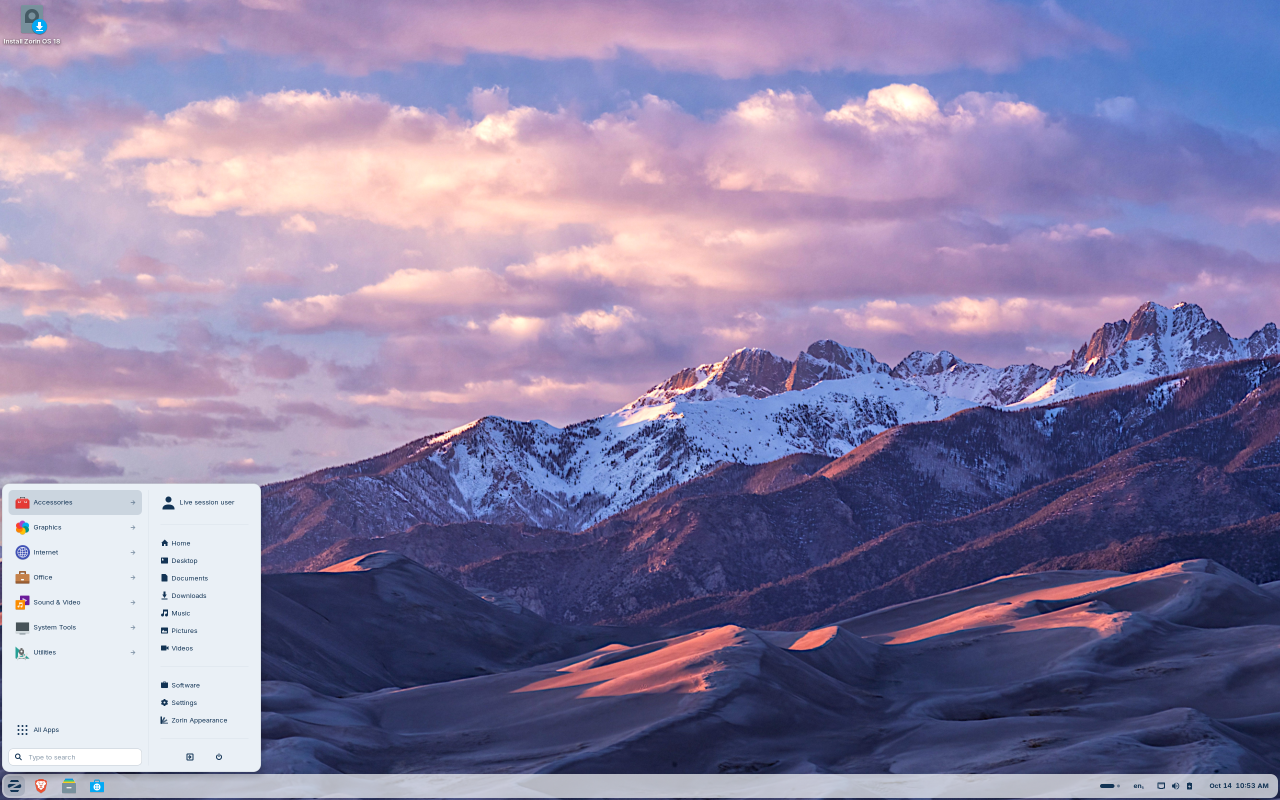
Zorin OS is an Ubuntu-based Linux distribution designed especially for newcomers to Linux. It has a Windows-like graphical user interface and many programs similar to those found in Windows. Zorin OS also comes with an a…
Zorin OS is an Ubuntu-based Linux distribution designed especially for newcomers to Linux. It has a Windows-like graphical user interface and many programs similar to those found in Windows. Zorin OS also comes with an application that lets users run many Windows programs. The distribution's ultimate goal is to provide a Linux alternative to Windows and let Windows users enjoy all the features of Linux without complications.
DistroWatch Ranking
#1
 Cachy OS
Cachy OS
#2
 Linux Mint
Linux Mint
#3
 MX Linux
MX Linux
#4
 Pop OS!
Pop OS!
#5
 Debian
Debian
#6
 Zorin OS
Zorin OS
#7
 Fedora
Fedora
#8
 Ubuntu
Ubuntu
#9
 EndeavourOS
EndeavourOS
#10
 Bazzite
Bazzite
About Rankings
Rankings are based on DistroWatch Page Hit Rankings — a measure of visitor interest, updated manually by our team. Higher interest = lower number.